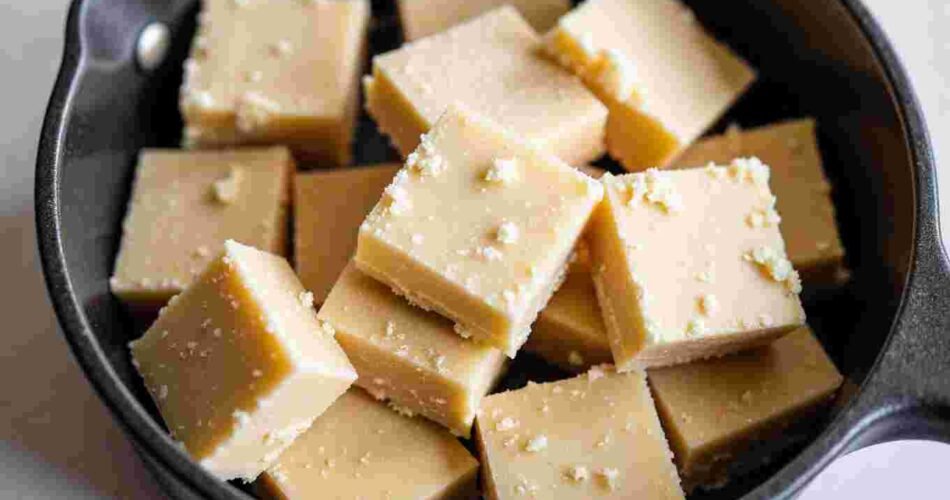

Scottish Tablet is a traditional sweet treat that’s a delightful twist on classic fudge—think crumbly, grainy, and utterly addictive. You’ll need just four simple ingredients: granulated sugar, whole milk, unsalted butter, and vanilla extract. The magic happens in the pan as you cook the sugar and milk to a precise soft-ball stage, about 115°C, before beating in butter and vanilla to bring that creamy, melt-in-your-mouth texture. Trust me on this one—stirring constantly at the start and knowing when to stop makes all the difference to get that perfect, crumbly consistency. It’s a game-changer for your homemade sweets repertoire!
Key Takeaways:
- Prep Time: 10 minutes
- Cook Time: 30 minutes
- Total Time: 40 minutes plus setting time
- Servings/Yield: About 20 small squares
- Difficulty Level: Intermediate
- Dietary Tags: Vegetarian, Contains Dairy
- Category Tags: Dessert, Traditional Scottish Sweet, Confectionery
Recipe Key Info 📝
Scottish Tablet is a classic treat that’s been loved in homes across Scotland for generations. It’s known for its unique grainy texture—think fudge’s crumbly cousin—which makes it a delightful change from the usual sweets. The ingredients list is wonderfully simple: just sugar, whole milk, unsalted butter, and vanilla extract. It’s all about combining these basics with the right technique to get that perfect balance of creamy and crumbly.
One of the essential tips is using a heavy-bottomed pan. This helps heat the mixture evenly, reducing the risk of scorching. You’ll want to keep stirring until the sugar dissolves fully—don’t skip this step, as sugar crystals left undissolved can cause unwanted grittiness. The key to success lies in reaching the “soft-ball stage” on your thermometer, about 240°F (115°C). This temperature ensures the sugar sets just right to give you the tablet’s signature texture.
Adding butter and vanilla at the right time adds richness and flavour that takes the tablet to the next level. Beating the mixture vigorously after this is crucial—it cools the mixture slightly and brings out that creamy, thick consistency. Pour it into a greased tray and patiently let it set until firm before cutting into squares. Trust me, this little extra care makes all the difference in nailing the perfect Scottish Tablet every time!
Ingredient List 🥄
Here’s where the magic begins. For this classic Scottish Tablet, you’ll want just four simple ingredients — but trust me, each one plays a crucial role in getting that perfect crumbly sweetness.
- 4 cups of granulated sugar. This might sound like a lot, but sugar is the backbone of tablet’s signature texture and flavour. Using granulated sugar rather than powdered is key because it gives the tablet its characteristic grainy bite. Don’t try to substitute with alternatives — they just won’t set right.
- 1 cup of whole milk. The milk adds richness and moisture, helping dissolve the sugar properly. Whole milk works best here because of its fat content; skim or low-fat milk won’t give you that silky smooth final texture. If you’re after a creamier tablet, this is the ingredient that takes it to the next level.
- 2 tablespoons of unsalted butter. Adding butter towards the end of cooking introduces a luscious depth and stops the mixture from becoming too hard once cooled. Unsalted butter is the safest bet so you can control the sweetness without any salty surprises. Plus, butter helps that gorgeous creamy finish when you beat the mixture vigorously.
- 1 teaspoon of vanilla extract. It’s the secret touch that transforms the tablet from simply sweet to utterly inviting. Vanilla complements the caramel tones and adds warmth — just a little goes a long way.
Before you start cooking, make sure you have a heavy-bottomed pan ready. It’s not technically an ingredient, but it’s important for even heat distribution, so your sugar melts gently without burning. Little details like this matter when making tablet; uneven heat can ruin the grainy texture we’re aiming for.
Keep measuring accurate and choose quality ingredients — that’s the recipe’s best promise. Your kitchen is about to fill with the most wonderful caramel smell. Ready to bring these ingredients to life?
Step-by-Step Instructions with Pro Tips for Perfect Scottish Tablet 👩🍳
Start by Combining Sugar and Milk
Pour your 4 cups of granulated sugar and 1 cup of whole milk into a heavy-bottomed pan. Using a heavy-bottomed pan is crucial—it spreads heat evenly and helps stop your sugar from burning, which can ruin the flavour. Heat this over medium heat, stirring constantly. Keep stirring until the sugar is fully dissolved—this ensures a smooth mixture without any grainy lumps sneaking in.
Bring It Up to the Boil, Then Simmer
Once the sugar has dissolved, crank the heat up to bring the mixture to a rolling boil. Then, turn the heat down low and let it simmer—but here’s the tricky part: don’t stir during this simmering stage. Stirring can cause unwanted sugar crystals to form, leading to a gritty outcome. Instead, let the mixture bubble away gently.

Your aim here is to reach what’s called the soft-ball stage, around 115°C (240°F). This is a sugar-cooking term meaning when you drop a bit of the syrup into cold water, it forms a soft, squishy ball you can easily shape with your fingers. If you don’t have a candy thermometer, you can test by dropping a small spoonful into a bowl of cold water and seeing if it forms that soft-ball texture.
Add Butter and Vanilla, Then Beat Like Your Life Depends on It
Once you hit that stage, take the pan off the heat and quickly stir in 2 tablespoons of unsalted butter and 1 teaspoon of vanilla extract. This is where the flavour and creaminess come in. Now comes the workout: beat the mixture vigorously. You want to cool it down and start that thick, creamy texture that’s signature for tablet. Trust me, don’t skimp here—it’s a game-changer.
As you beat, the mixture will turn lighter in colour and thicker in texture. This can take a good few minutes, so be patient and give your arm a rest if needed!
Pour, Set, and Cut
Pour the thick mixture into a greased tray—greasing helps your tablet come away easily once it’s set. Leave it to cool at room temperature until it’s completely firm. This might take a couple of hours, so treat it like a sweet patience test. Once set, cut the tablet into small squares.
Final Tip: Enjoy the Unique Grainy Texture
Scottish tablet is not fudge—it’s grainier and crumblier, which is part of its charm. Don’t worry if it’s not silky smooth; that texture is a sign of a well-made tablet. Now, all that’s left is to enjoy your delicious homemade treat!
With these steps and pro tips, you’re well on your way to mastering Scottish tablet in your own kitchen. Give it a go, and savour every crumb!
Recipe Variations & Serving Suggestions 🍋
Now, here’s the fun part—making your Scottish tablet truly your own and serving it just right to impress your guests or treat yourself. While the basic recipe is a classic, you can easily tweak a few things to suit your taste or occasion.
For starters, try swapping the vanilla extract for a splash of lemon zest or a pinch of cinnamon. These little changes add a fresh twist that lifts the tablet beyond the usual, giving it a subtle zing or warm spice. If you want to take it up a notch, stir in some chopped nuts like walnuts or pecans right before pouring the mixture into the tray. They bring a lovely crunch that contrasts perfectly with the tablet’s characteristic grainy texture.
If you’re wondering about texture, remember that beating the mixture vigorously after adding butter and vanilla is key. This step is a game-changer—it creates that creamy yet crumbly consistency tablet is famous for. Resist the urge to skip this or cut corners, as it impacts the final bite.
For serving, Scottish tablet is brilliant cut into small squares, perfect for sharing with friends over a cup of tea or coffee. You can also wrap individual pieces in parchment paper for a charming homemade gift—trust me on this one, it’s always a sweet hit.
While that’s cooling, remember to store any leftovers in an airtight container at room temperature. This keeps your tablet fresh without it going sticky or hardening too much. These little tips bring out the best in your Scottish tablet every time!
Why This Recipe Works 🔑
Scottish tablet is a classic treat that’s all about getting the texture just right — that crumbly, grainy feel sets it apart from fudge. The key here is hitting the soft-ball stage, which means heating the sugar and milk mixture to about 240°F (115°C). This precise temperature lets the sugar crystals form slowly, giving the tablet its signature crumbly texture instead of being too smooth or sticky.
Using a heavy-bottomed pan is a game-changer because it spreads the heat evenly, preventing the sugar from burning or crystallising too quickly. Stirring until the sugar dissolves ensures a smooth start, but once it’s boiling, simmering without stirring helps those tiny sugar crystals grow steadily. Adding butter and vanilla at just the right time boosts flavour and richness, while vigorously beating the mix makes it thick and creamy before setting firm.
Trust me on this one — these steps take your Scottish tablet to the next level every time!
Frequently Asked Questions (FAQ) ❓
Why does my tablet turn out too soft or sticky?
Tablet needs to reach the soft-ball stage, which is about 240°F or 115°C. This means the sugar syrup should thicken enough to form a soft ball when dropped into cold water—a classic candy thermometer moment. If it’s undercooked, it won’t set properly and will be sticky.
Do I have to stir while it simmers?
While the sugar and milk dissolve, keep stirring to prevent burning. But once it starts boiling and you reduce the heat, avoid stirring. Stirring at this stage can cause crystallisation, which changes the texture. Just let it simmer gently and keep a watchful eye.
Why add butter and vanilla at the end?
Butter adds richness and helps create that creamy consistency, while vanilla lifts the flavour, making it truly special. Adding them after cooking stops the mixture from becoming greasy or overly sweet.
Can I store tablet?
Yes! Once cut, keep the pieces in an airtight container at room temperature. It will keep its lovely crumbly texture for a couple of weeks — trust me, it won’t last that long!
Got more questions? Think of this as your sugar-coated roadmap to tablet success!
Final Thoughts and Encouragement 🌟
Making Scottish tablet is truly a rewarding treat that’s easier than it looks once you get the hang of controlling the heat. Remember, stirring the sugar and milk until fully dissolved sets you up for that perfect grainy texture we love. Hitting the soft-ball stage means your tablet will have the ideal crumbly bite, so use a candy thermometer or the cold-water test to be sure. Adding butter and vanilla at just the right time takes the flavour to the next level and gives that lovely creamy finish when you beat it. With a bit of patience and these tips, you’ll have a classic Scottish sweet ready to impress every time.